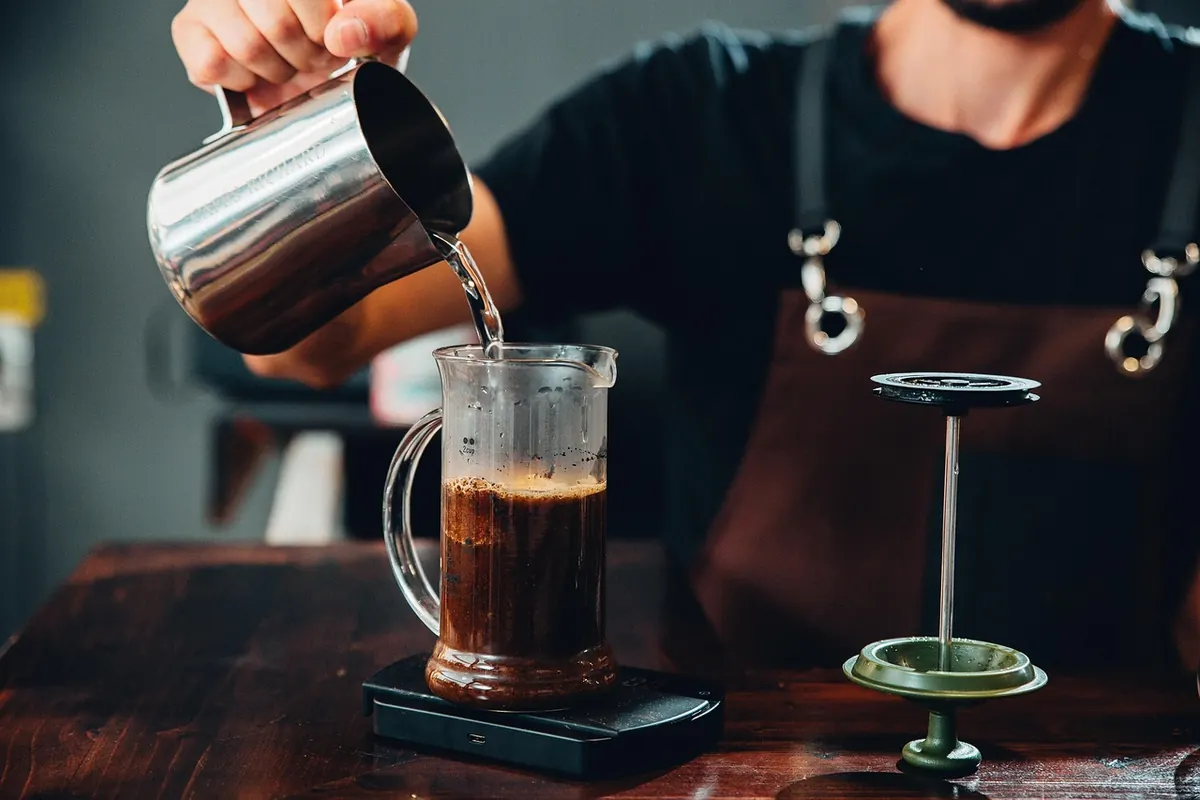
How Long Should You Steep French Press Coffee? A Time-and-Taste Guide
Four minutes. That is the number printed on most French press boxes, repeated in most brewing guides, and the one a lot of people follow without ever questioning it. It is a fine starting point. It is not the answer. A four-minute steep suits a medium-coarse grind at a fairly standard strength, and if that is what you are drinking, you may never need to think about it again. But if your coffee comes out thin and tea-like, or harsh enough to make you wince, the clock is the first thing worth changing.
The French press is a full-immersion brewer: the grounds sit in the water the entire time, and nothing stops the extraction except you. That makes steep time both the most powerful and the most forgiving adjustment in the whole process. A minute too long is rarely ruined; a minute too short is easy to fix on the next pot. Here is how to choose a time, read what the cup is telling you, and adjust without guessing.
The Working Range: Three to Six Minutes
Most good French press coffee lands somewhere between three and six minutes of contact time, counted from the moment you finish pouring the water. Below three minutes, coarsely ground coffee usually tastes underdeveloped — sweet-smelling but hollow, with a thin body and a finish that vanishes. Above six or seven minutes, the brew tends to pick up dryness and a woody, papery edge, even if you used a coarse grind.
Where you land inside that window depends mostly on two things: how fine the grind is, and how dark the roast is. Finer particles give up their flavor faster, so a grind closer to drip coffee needs less time. Darker roasts are more porous and more soluble, so they also extract faster than light ones. A light-roasted Ethiopian coffee at a coarse grind might want five minutes; a dark-roasted blend at a medium grind can be excellent at three.
Steep Times by Grind Size
These are starting points, not rules. Use them for your first pot, then adjust to taste.
- Fine-coarse (like coarse sand, just shy of drip): 2:30 to 3:00. Keep it short — these particles extract quickly and turn bitter fast.
- Medium-coarse (the standard press grind, like sea salt): 4:00. This is the familiar default, and it works well for most medium roasts.
- Coarse (like rough sea salt or cracked pepper): 4:30 to 5:30. The extra time compensates for the slower release of flavor from bigger pieces.
- Very coarse (like breadcrumbs): 6:00 to 7:00. Even then, expect a lighter body and a shorter finish; very coarse grinds rarely give you a rich cup no matter how long they sit.
If you are unsure which grind you actually have, look at the spent grounds after plunging. Sludge at the bottom of the carafe means you went too fine. Clean, distinct grains suggest you can afford a longer steep.
What "Steeping" Really Means in a French Press
Timing starts when the last of the water hits the grounds, not when you begin pouring and not when you press. The whole bed should be saturated within about fifteen seconds; stir once gently to make sure no dry clumps are floating on top. That stir is also the moment you begin extracting, so it counts.
Two details are easy to miss. First, the crust of grounds that forms on the surface traps both heat and gas. Breaking it at the four-minute mark with a spoon — and skimming off the foam — releases the trapped carbon dioxide and lets the coffee settle, which makes for a cleaner pour. Second, and more important: pressing the plunger does not stop extraction. The grounds stay in contact with the liquid until you separate them. If you brew a large pot and drink it over half an hour, the last cup will taste noticeably different from the first.
If you want a consistent cup from a French press, decant the whole pot into a second carafe or a mug as soon as you press. That single habit fixes more complaints than any change to steep time.
Reading the Cup: Weak or Bitter?
Taste is the only measurement that matters, and the two common problems have opposite fixes. Diagnose before you adjust, or you will spend weeks chasing your own corrections.
If the coffee tastes weak, thin, or sour
Under-extraction is the usual culprit. Try one change at a time: add thirty seconds to the steep, tighten the grind by a notch, or raise the dose by a couple of grams. A very common cause of weak French press coffee is simply too little coffee — a 1:15 ratio by weight (say 30 grams of coffee to 450 grams of water) is a sensible starting point, and it is much stronger than the "one scoop per cup" many people use. Water that is not hot enough also flattens the cup; aim to brew between 92°C and 96°C, just off the boil.
If the coffee tastes bitter, dry, or harsh
You are over-extracting, or your grind is producing too many fine particles. Shorten the steep by thirty to sixty seconds, coarsen the grind slightly, or lower the water temperature a few degrees. Bitterness that arrives suddenly in the last third of a pot is a sign the coffee sat too long on the grounds rather than a sign of the initial steep time.
Other Levers Worth Knowing
Steep time is not the only dial, and sometimes it is the wrong one to turn. Grind is the biggest single factor in how fast flavor leaves the coffee, so a small change there often does more than a big change to the clock. Ratio controls strength independently of extraction: more coffee makes a stronger cup without necessarily making it more extracted. Temperature shifts the balance too — cooler water is more forgiving with dark roasts, hotter water helps light ones open up. Agitation matters as well; a vigorous stir at the start extracts faster than a gentle one, so keep your stirring consistent if you want repeatable results.
A Repeatable Method
- Weigh 30 grams of coffee at a medium-coarse grind and add it to a clean, pre-warmed carafe.
- Pour 450 grams of water just off the boil, saturating all the grounds within about fifteen seconds.
- Stir once gently. Start your timer.
- At four minutes, break the crust, skim the foam, and let the bed settle for thirty seconds.
- Press slowly and steadily, then pour immediately into a second vessel.
- Note the grind, time, and how it tasted. Change one variable on the next pot.
Finding Your Own Number
Start at four minutes with a medium-coarse grind and a 1:15 ratio. If the cup is balanced — sweet up front, enough body to feel substantial, a finish that does not turn bitter — keep it and stop fiddling. If it is weak, add time or coffee. If it is harsh, take time away or coarsen the grind. Write down what you did. Three or four pots will tell you more about your beans, your grinder, and your water than any chart, including this one, because the useful number is the one that makes the cup you want to drink again tomorrow.
Photo: ClaroCafe / Pixabay
Local Roaster Spotlight: How to Choose Beans from a Nearby Coffee Roaster
A practical guide to buying beans from a nearby roaster — how to read roast dates, what to ask at the...

Weekend vs. Weekday Coffee Brewing: A Time-Saving Routine Checklist
A practical checklist for splitting your coffee routine in two: fast, repeatable weekday brews and slower...
About Us